MEE Plant
Energy-smart MEEs that concentrate high-TDS streams for ZLD or recovery.
“Steam is gold—spend it once, use it many times.”
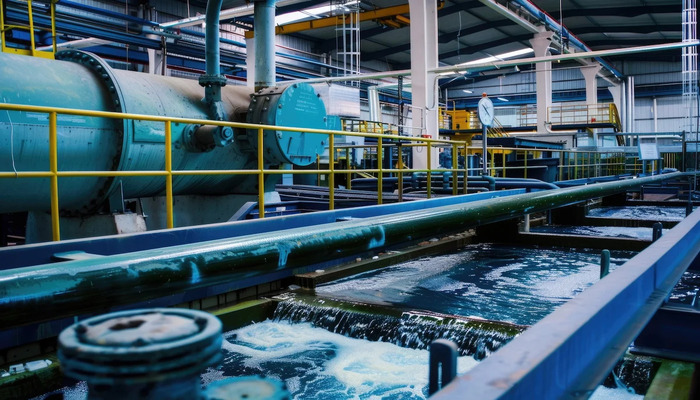
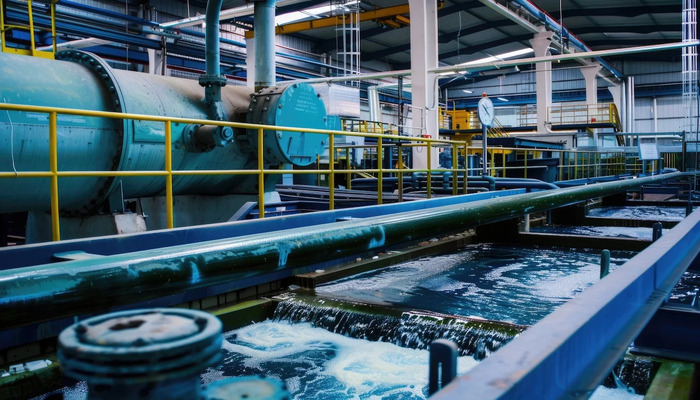
A Multi Effect Evaporator (MEE) plant is an industrial system used for concentrating liquids, especially solutions like wastewater or chemicals, by evaporating water or solvents using multiple stages or "effects." It efficiently reuses the vapor generated from one stage as the heating medium for the next, significantly reducing steam consumption and improving energy efficiency.
Design and Process
-
The MEE consists of several evaporators connected in series. The first effect uses steam as the heat source.
-
Vapor generated in the first effect is used to heat the subsequent effect under lower pressure, and this process continues through all stages.
-
Typical designs include forward feed, backward feed, or mixed feed arrangements, selected based on feed characteristics and thermal efficiency requirements.
-
Key components are heat exchangers, evaporator bodies, condensers, vapor separators, and vacuum pumps.
-
The design must consider factors such as boiling point elevation, heat transfer coefficients, pressure drops, and feed temperature.
-
Often incorporated with vapor recompression techniques to further improve energy savings.
-
The design ensures efficient vapor-liquid separation and heat transfer, minimizing energy use while achieving desired concentration.
Applications and Uses
-
Concentration of industrial effluents and wastewater to reduce volume for disposal.
-
Food and beverage industry for concentrating juices, milk, and other liquid products.
-
Chemical and pharmaceutical industries for solution concentration.
-
Salt manufacturing and brine concentration.
-
Desalination plants' brine volume reduction.
In summary, multi effect evaporators are designed as a series of evaporators that reuse vapor for heating across multiple stages, significantly enhancing energy efficiency. Their design involves careful selection of feed arrangement, heat transfer surfaces, and vapor management. These plants are widely used across industries like food processing, chemicals, pharmaceuticals, and wastewater management for efficient concentration of liquids while minimizing energy consumption.
Key Benefits
- Chemical manufacturing plants for concentrating liquid reactants or by-products.
- Food processing plants for concentrating syrups, juices, and dairy products.
- Effluent treatment plants to concentrate wastewater before disposal.
- Pharmaceutical industries for concentrating liquid medicines.
- Industries requiring energy-efficient evaporation methods to reduce operational costs.
- MEE is widely used for product concentration and has now been used for recovery of water from wastewater