
Water Softening Plant
Ion-exchange softeners that stop scale and protect boilers and cooling towers.
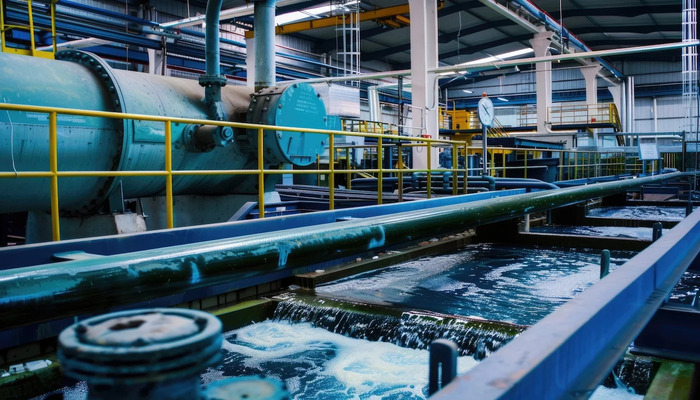
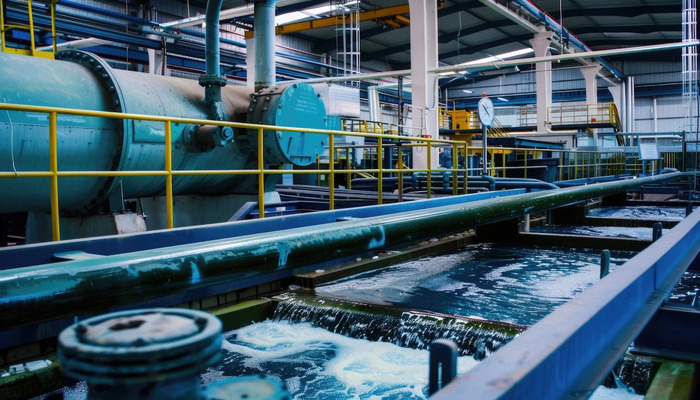
A water softener plant is a facility designed to remove hardness-causing minerals such as calcium and magnesium from water, making it soft and suitable for industrial, commercial, or domestic use. The process primarily involves ion exchange, where hardness ions are replaced with sodium or potassium ions using specialized resin beds.
Design and Process
-
The design of water softener plants depends on factors such as water hardness, volume of water to be treated, flow rate, and frequency of regeneration cycles.
-
Key components include resin tanks filled with cation exchange resins, a brine tank for regenerant solution, and control valves for managing the regeneration and service cycles.
-
Water passes through the resin bed, where hardness ions like Ca2+ and Mg2+ are exchanged for Na+ ions.
-
The resin is periodically regenerated using a saline solution (brine), flushing out the accumulated hardness ions to restore the resin's capacity.
-
Tank sizes, resin volume, and brine injector design are tailored to meet the specific water demand and hardness level.
-
Regeneration typically involves several steps: backwashing, brine draw and slow rinse, fast rinse, and service mode to ensure continuous soft water supply.
Applications and Uses
-
Used across industries to prevent scaling and damage to boilers, cooling towers, and heat exchangers.
-
Essential in water treatment plants to enhance the efficiency of downstream equipment.
-
Common in municipal and residential water treatment to improve taste and extend the life of plumbing systems.
-
Used in food processing, pharmaceuticals, textiles, and power plants where softened water improves product quality and process efficiency.
Key Benefits
- Industrial facilities requiring large-scale water softening.
- Commercial buildings, hotels, hospitals, and residential complexes.
- Water treatment plants for municipal water supply.
- Any setting where water hardness leads to scaling, equipment wear, or reduced efficiency.
- an ion exchange process to remove hard minerals like calcium and magnesium from water, preventing scale buildup in pipes and appliances
- Protects appliances and machinery from the corrosive effects of hard water, leading to lower maintenance costs and longer service life.